

Space Warp equations are being tested using an instrument called the White-Juday Warp Field Interferometer. At Johnson Space Center, Eagleworks has initiated an interferometer test bed that will try to generate and detect a microscopic instance of a little warp bubble.
Across 1cm, the experimental rig should be able to measure space perturbations down to ~1 part in 10,000,000. As previously discussed, the canonical form of the metric suggests that boost may be the driving phenomenon in the process of physically establishing the phenomenon in a lab. Further, the energy density character over a number of shell thicknesses suggests that a toroidal donut of boost can establish the spherical region. Based on the expected sensitivity of the rig, a 1cm diameter toroidal test article (something as simple as a very high-voltage capacitor ring) with a boost on the order of 1.0000001 is necessary to generate an effect that can be effectively detected by the apparatus. The intensity and spatial distribution of the phenomenon can be quantified using 2D analytic signal techniques comparing the detected interferometer fringe plot with the test device off with the detected plot with the device energized.
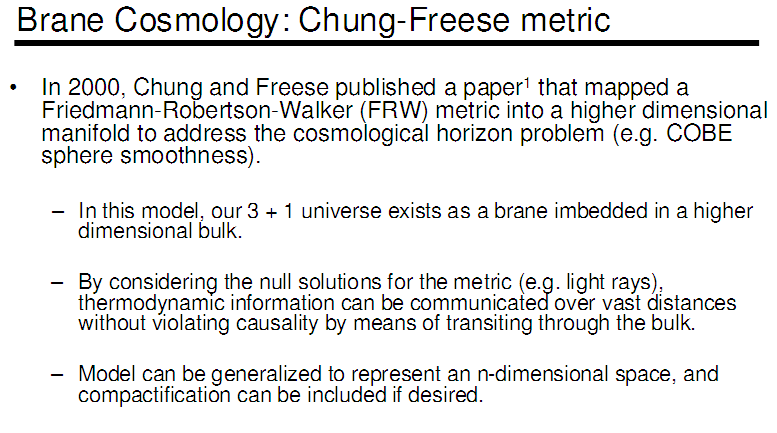
Here is information from a presentation by Harold White that explains the test setup and physics around the concept.

H. G. White and E. W. Davis- The AlcubierreWarp Drive in Higher Dimensional Spacetime
If you liked this article, please give it a quick review on ycombinator or StumbleUpon. Thanks
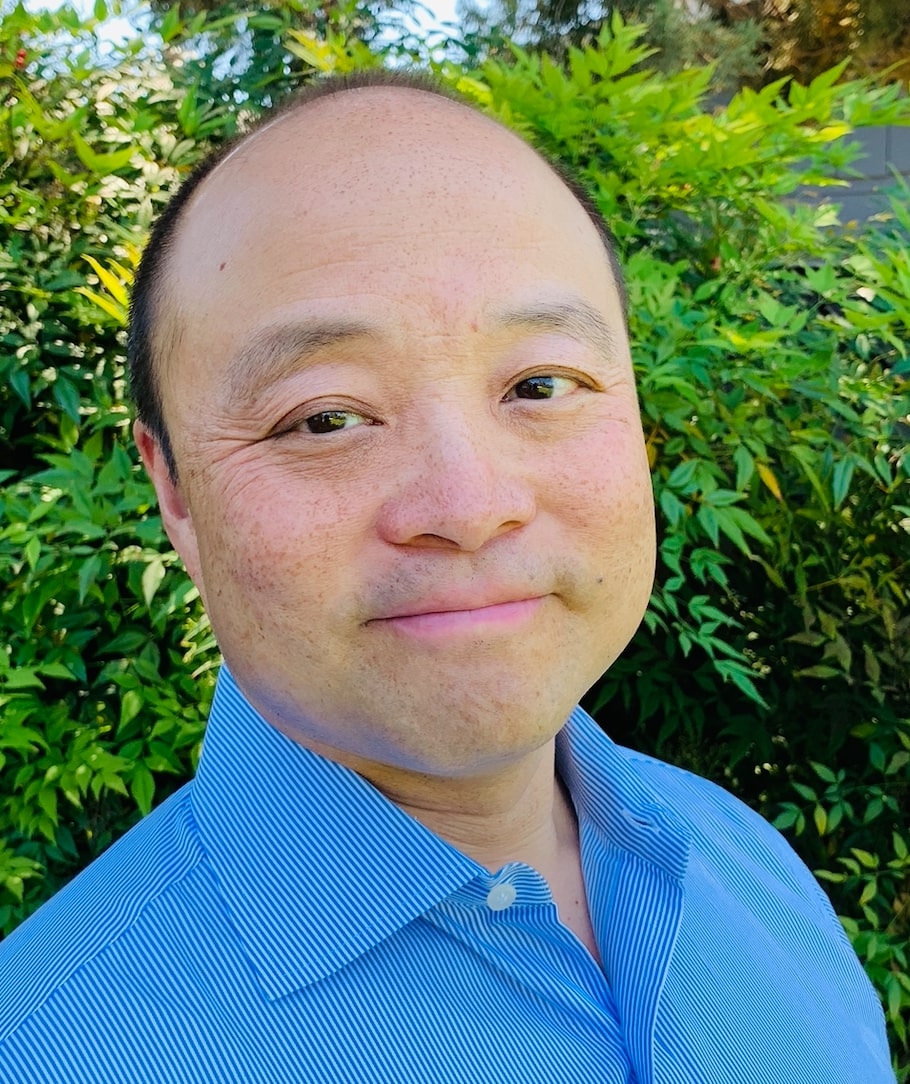
Brian Wang is a Futurist Thought Leader and a popular Science blogger with 1 million readers per month. His blog Nextbigfuture.com is ranked #1 Science News Blog. It covers many disruptive technology and trends including Space, Robotics, Artificial Intelligence, Medicine, Anti-aging Biotechnology, and Nanotechnology.
Known for identifying cutting edge technologies, he is currently a Co-Founder of a startup and fundraiser for high potential early-stage companies. He is the Head of Research for Allocations for deep technology investments and an Angel Investor at Space Angels.
A frequent speaker at corporations, he has been a TEDx speaker, a Singularity University speaker and guest at numerous interviews for radio and podcasts. He is open to public speaking and advising engagements.