
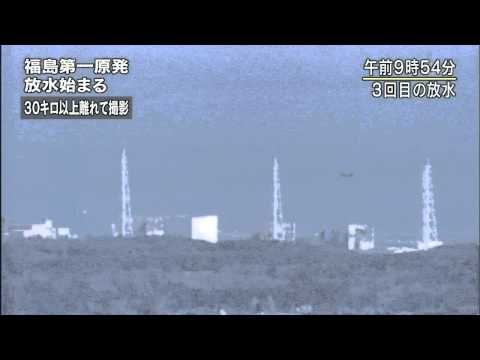
Two CH-47 Chinook helicopters drop water on Reactor 3 and Reactor 4 of Fukushima nuclear plant, March 17 2011. CH-47 Chinook helicopter is capable of dropping 7.5 tonnes of water. Four loads were tried from 0948 AM in order to minimize the crews’ exposure to radiation.
“There is no water in the spent fuel pool and we believe that radiation levels are extremely high, which could possibly impact the ability to take corrective measures,” chief of the U.S. Nuclear Regulatory Commission Gregory Jaczko said at a House Energy and Commerce subcommittee hearing Wednesday.
If Jaczko is correct, the outer shell of the rods could explode with enough force to propel radioactive fuel over a wide area.
The U.S. is calling on Americans in Japan to stay at least 80 kilometres away from the plant, while Japan’s official evacuation zone is only about 20 km. The Obama administration has also authorized plans to transport Americans out of the country as radiation fears grow.
Tokyo Electric Power Co. said they were close to completing a new power line that could power cooling systems to end the crisis at the nuclear plant.
When completed, it will restore power to pumps that will send a steady supply of water to the six reactors, cooling down any fuel cells.
If you liked this article, please give it a quick review on ycombinator or StumbleUpon. Thanks
Brian Wang is a Futurist Thought Leader and a popular Science blogger with 1 million readers per month. His blog Nextbigfuture.com is ranked #1 Science News Blog. It covers many disruptive technology and trends including Space, Robotics, Artificial Intelligence, Medicine, Anti-aging Biotechnology, and Nanotechnology.
Known for identifying cutting edge technologies, he is currently a Co-Founder of a startup and fundraiser for high potential early-stage companies. He is the Head of Research for Allocations for deep technology investments and an Angel Investor at Space Angels.
A frequent speaker at corporations, he has been a TEDx speaker, a Singularity University speaker and guest at numerous interviews for radio and podcasts. He is open to public speaking and advising engagements.